The People We Never Forget
An afternoon in Ruaha, more than twenty years ago…
Often my mind drifts back to an afternoon in Ruaha, more than two decades ago.
There is someone I haven't seen in all that time, someone I spent just a single afternoon with, and yet I still think of her often. Her name is Sue Stolberger, and we met in Ruaha, Tanzania.
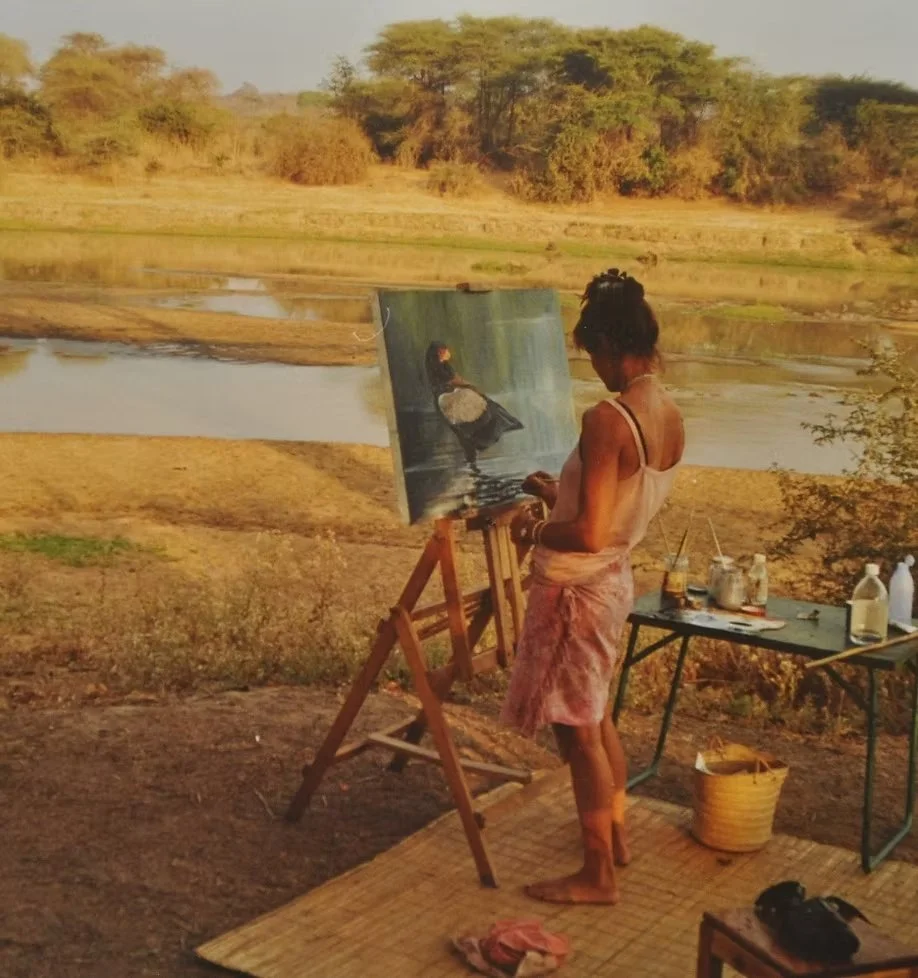
Our host at Mwagusi Safari Camp had noticed something about us. He felt we were “in tune” with nature in a way that many safari-goers weren't and he loved how we strived to capture stories with our cameras not just snapshots of the animals and landscapes. He had some special friends living nearby whom he thought we should meet. Those friends were Sue and her partner, Rob Glen, who had made their home in the wilderness of Ruaha.
I can't tell you exactly how it happened, but almost immediately, Sue and I connected. It was one of those rare and wonderful connections between two people who, until that moment, were strangers. From the beginning, it felt as though we'd known each other for years, almost as though we were long-lost sisters who had somehow found one another again in the middle of the African wilderness.
Sue welcomed me like a big sister. We left the men to talk. She was full of enthusiasm as she showed me around her lovely, humble camp, taking obvious pride in the life she and Rob had made there. I followed her around, taking it all in with awe and, if I'm honest, a little envy. What an extraordinary freedom it must be to live so close to the wild, with the rhythms of the African bush shaping your days.
She laughed when I told her I envied her life. Then she confessed that she envied my camera equipment.
Sue loved to photograph the subjects she would later paint, studying them through her lens before translating what she saw onto paper or canvas. She had a good camera and lens, but the equipment I carried that year was more up to date. It was a small exchange, perhaps, but one I remember fondly. There we were, each looking at the other's life and seeing something wonderful in it.
Our conversation went far beyond cameras and the wilderness around us. We found ourselves sharing thoughts and beliefs I rarely speak about with others. I don't know whether it was the setting, the ease of her company, or simply something in our natures that recognized itself in the other. Whatever it was, I felt unusually free to be myself with her, and she apparently felt the same way.
I can't remember which of us first shared that feeling of being able to “tap in” to animals. But as we talked, we discovered that we shared what I can only describe as a gift, something I seldom discuss for fear people might think I'm crazy. With Sue, I didn't feel the need to hold back and neither did she.
And then, all too soon, it was time to leave.
We didn't promise to stay in touch. It would have been impractical, and we both knew it. Sue and Rob lived in separate camps near one another, deep in Ruaha, with lives far removed from the ordinary conveniences most of us take for granted. Reliable internet wasn't part of their world, and keeping in touch across continents wasn't as simple as it is today.
Still, when we parted, I felt a surprising sense of loss and I could see it in her expression as well. I remember fighting back tears as we pulled away, feeling a little foolish that an afternoon with someone I'd only just met could affect me so deeply.
We hadn't taken a photograph together. At the time, it didn't occur to me that we needed one. Being together was enough. I had no idea that, years later, I would wish I had a picture of the two of us to hold alongside the memory.
Sue Stolberger: Artist of the Wild Heart
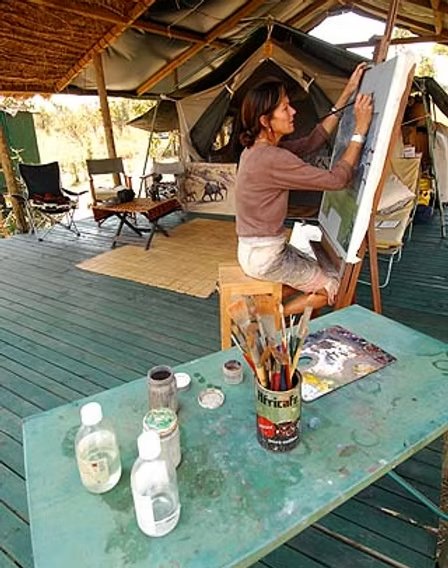
Sue's life in Ruaha was as extraordinary as the woman I met that afternoon.
For many years, she and Rob lived in separate camps deep in the wilderness of Ruaha National Park, surrounded by the wildlife and landscapes that inspired their work. Giraffes and elephants might wander past the veranda, birds would join them for breakfast, and lions could be heard roaring in the darkness. This wasn't simply a place they visited for inspiration. It was their home for decades.
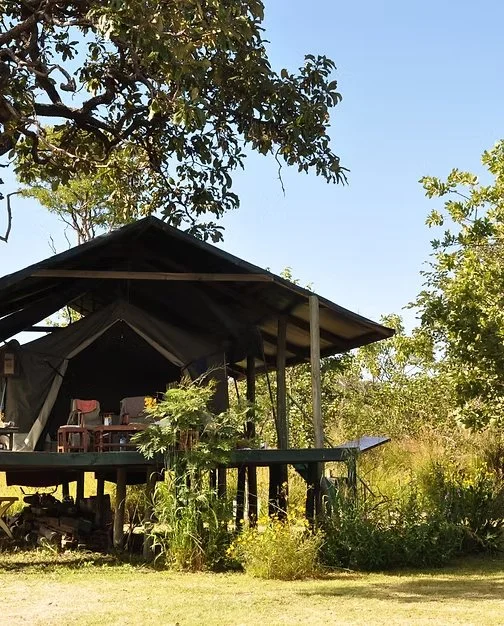
Sue is a wildlife artist, naturalist, and conservationist whose work grew out of years of close observation. Her field sketches and paintings reflect more than an eye for detail. They reveal an intimate understanding of the animals she watched and the connections between living things and the places they depend on.
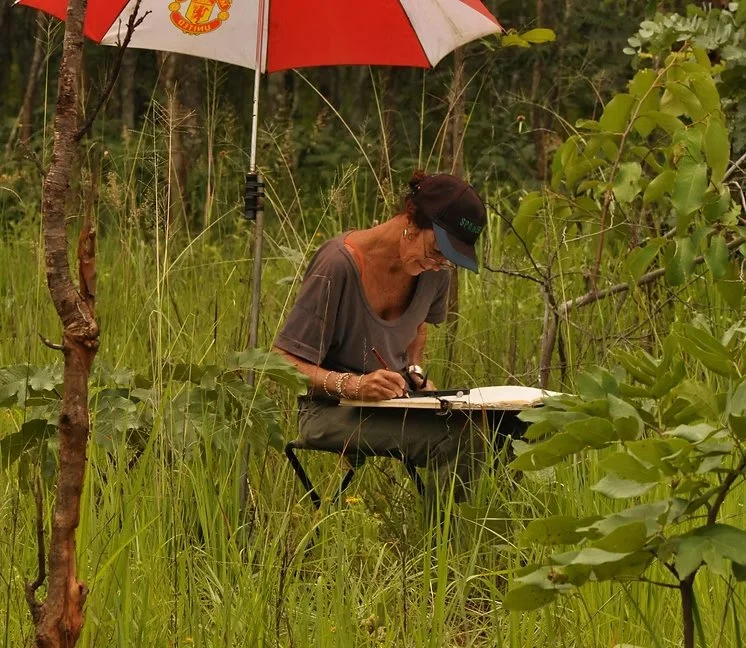
She co-authored Ruaha National Park: An Intimate View and created other works, including Ruaha Sketchbook and Nature Speaks. She also helped create interpretive signs at Mwagusi Safari Camp, sharing her knowledge of the natural world with the people fortunate enough to visit.
Her art and her life are deeply intertwined. She had chosen to live in the place she loved, observing its rhythms and allowing the wilderness to teach her. I admired that then, and I still do.
I sometimes wonder whether I understood, even in that brief afternoon, just how unusual her life was. I knew I was meeting someone special. I simply couldn't have known how often I would think of her in the years that followed.
The People Who Stay With Us
Sue and I didn't keep in touch. Life moved forward, as it does, and the years passed. For a long time, she lived in a place where the internet wasn't readily available. Eventually, I had an email address for her, but I never quite managed to send that first message.
What would I say after all this time?
Hello, Sue. You probably don't remember me, but we spent an afternoon together in Ruaha more than twenty years ago, and I've thought about you ever since.
I have imagined writing those words more than once. And then the questions creep in. Does she remember me? Does she remember our conversation, the way we seemed to understand one another so easily? Or was I simply one of many visitors who passed through her life, while that afternoon became something much more significant in mine?
I have no way of knowing. Perhaps she remembers me clearly. Perhaps she remembers only a pleasant visit. I may never know what place I occupy in her story, and that is part of what makes this memory so difficult to explain.
We tend to think of lasting connections as something that grows over time. We expect friendship to be built through shared experiences, years of conversations, and the steady presence of another person in our lives. Often, that is exactly how it happens.
But not always.
Sometimes, we meet someone and feel an immediate sense of recognition, as though we have stepped into a conversation that began long before we arrived. We may have little in common on the surface, or our lives may be so different that we would never ordinarily cross paths. Yet something about that person feels familiar, and for reasons we can't quite explain, we let down our guard.
I think safari can make room for these connections. Life follows a different rhythm when we're away from our usual responsibilities and distractions. We spend long hours together in the vehicle, watch the landscape change, listen to the night sounds beyond our tents, and share the quiet excitement of seeing wild animals living entirely on their own terms. There is time to talk, but also time to simply be.
Perhaps that slower rhythm allows us to notice one another differently. Or perhaps some people would find each other anywhere.
Whatever the explanation, I've learned that the length of an encounter doesn't always determine its place in our lives. Some people travel beside us for years and become part of our everyday world. Others enter briefly, leave us with something we can't quite name, and continue to live in our thoughts long after we've parted.
Sue is one of those people for me.
More than twenty years have passed since that afternoon in Ruaha. I remember the feeling of being welcomed, understood, and somehow at home with a woman who had been a stranger only moments before.
I remember her pride in the life she had built, her laughter over our cameras, and the ache I felt as we drove away.
Perhaps one day I'll find the courage to send that email. I don't need Sue to remember the afternoon exactly as I do, and I wouldn't want to place any expectation on her. I would simply like her to know that our paths crossed for only a few hours, yet she left an impression that has stayed with me all these years. I want her to know how special she has been to me, and how reading the stories in her books brings that afternoon back in a wonderful flood of memories.
I may never be able to explain why our connection was so immediate or why it has stayed with me for so long. Perhaps it doesn't need explaining. Perhaps the important thing is simply that it happened.
Africa has given me so many gifts over the years. The privilege of witnessing wild animals living their lives on their own terms. Landscapes that still take my breath away. The sounds of the bush at night and the first light of another African morning. And the people, oh, the people, who have made these journeys so much richer than I could ever have imagined.
A guide whose friendship has grown over decades. Safari mates who become family. Someone whose kindness stays with you. And, occasionally, someone you meet for just a few hours who somehow finds a permanent place in your heart.
We don't always understand why certain people leave such a lasting impression. We may never know whether they carry the same memory of us. But I think that's part of the wonder of human connection: we don't have to know what it meant to the other person for it to have meant something to us.
More than twenty years later, I can still close my eyes and find myself back in Ruaha, remembering a woman who welcomed me like a big sister and made me feel as though we'd known each other forever.
That afternoon will always be one of my most cherished, unexpected gifts from Africa.