The Safari Journal August 2026
News from the Bush
A New Chapter for Ngorongoro's Rhinos
One of the most exciting conservation stories unfolding in Tanzania is taking place on the floor of the Ngorongoro Crater.
For decades, the crater has been one of the best places in East Africa to search for the endangered black rhino. While sightings were always possible, they often required patience, good fortune, and a keen-eyed guide. Black rhinos are browsers, preferring the shrubs and trees found along the crater walls. Much of that habitat lies far from the roads, making sightings both challenging and incredibly rewarding.
Now, visitors are witnessing something entirely new.
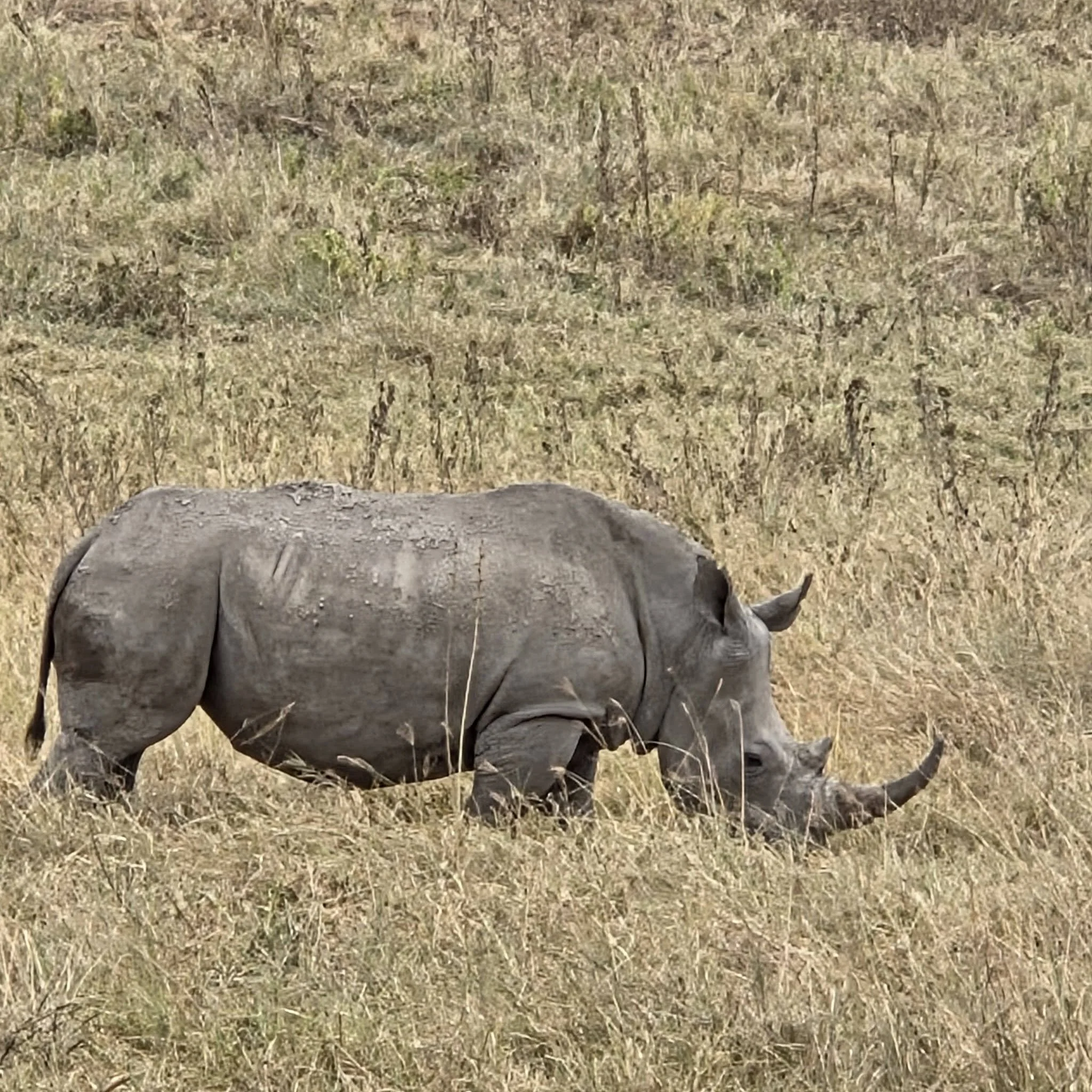
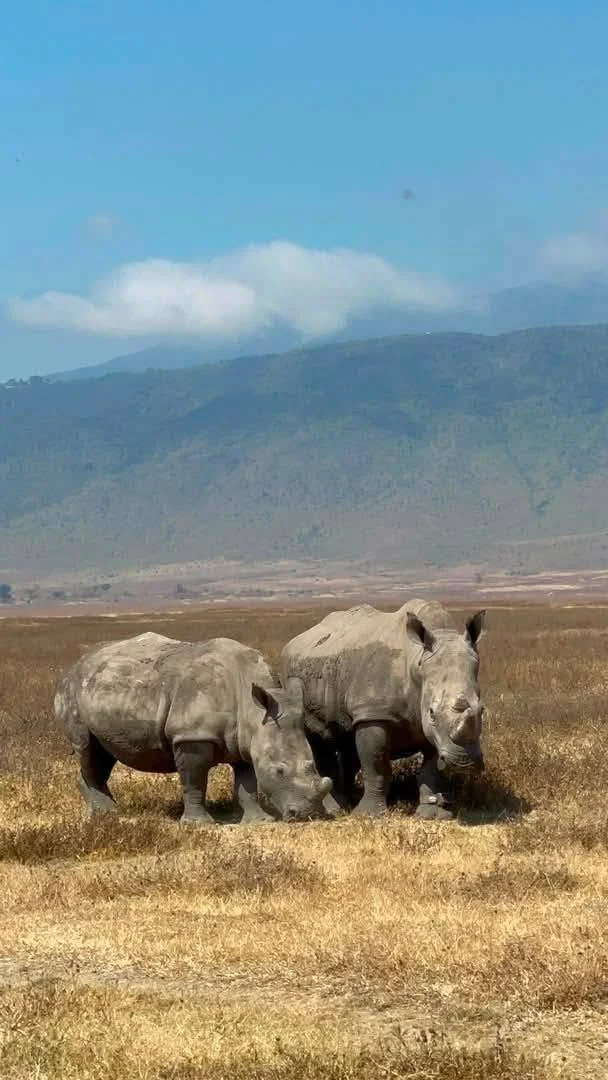
In 2025, Tanzania welcomed its first southern white rhinos as part of an ambitious conservation program. After spending many months in a protected acclimation area, they have now been released into the crater, where they are thriving.
Unlike their black rhino cousins, white rhinos are grazers. They spend much of their day feeding on grasses across the open plains, which means safari guests are often treated to wonderful, close views as these magnificent animals quietly graze or stroll across the landscape.
It's important to remember that these aren't simply "new animals" for tourists to photograph. They represent decades of conservation work, careful planning, and hope for the future. Every successful reintroduction strengthens the long-term survival of one of Africa's most iconic species.
For guests visiting Ngorongoro today, seeing both black and white rhinos on the same day has become a very real possibility—a conservation success story unfolding before our eyes.
Behind the Lens
Chasing Sunsets... Without Stopping
One of the questions I'm often asked is, "How do you get those beautiful sunset photos if you're always racing to be out of the park before closing time?"
The simple answer is... we don't stop, I’ve learned how to shoot on the fly!
Park regulations require us to be out of the park by a certain time, and often the most spectacular sunsets happen just as we're making our way toward the gate. There simply isn't time to pull over and set up for the perfect photograph.
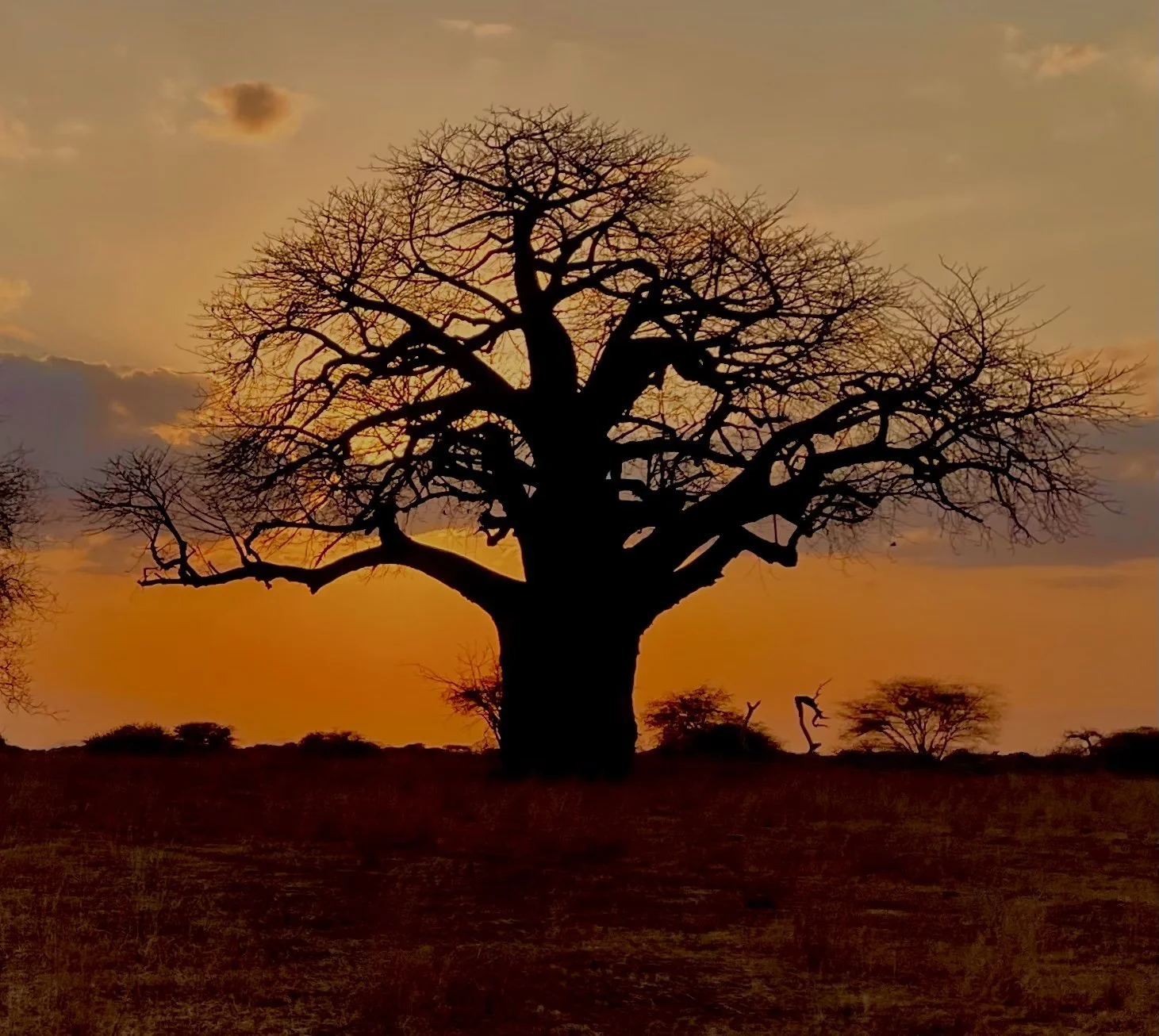
This image was taken with nothing more than my cellphone from a moving safari vehicle in Tarangire National Park.
Over the years, I've learned a little trick. As we're driving, I watch the road ahead for an interesting tree—an ancient baobab is always a favorite—that will create a striking silhouette against the evening sky.
Then I begin taking a series of photos just before we reach the tree, continuing until we're alongside it. The sharpest image almost always comes in those few moments before we draw even with it. Once the tree begins to slip behind us, motion blur becomes much more noticeable.
It isn't about luck. It's about anticipating the moment.
And sometimes, the photograph that tells the best story isn't the one that was perfectly planned. It's the one captured in the middle of the journey, with a little practice, a little patience, and a cellphone held out the window of a moving safari vehicle. I have done this with my Canon R5 and a 24-105mm lens as well, but honestly, the cellphone takes some mighty fine photos!
One of my favorite reminders is this: Don't let the perfect shot keep you from capturing the moment. Sometimes those unexpected, "on-the-fly" photographs become the ones that transport you back to Africa every time you look at them.
Safari Wisdom
It's a Safari... Not a Zoo
One of the biggest mindset shifts I encourage before every safari is this:
You're not visiting a zoo. You're stepping into the animals' world.
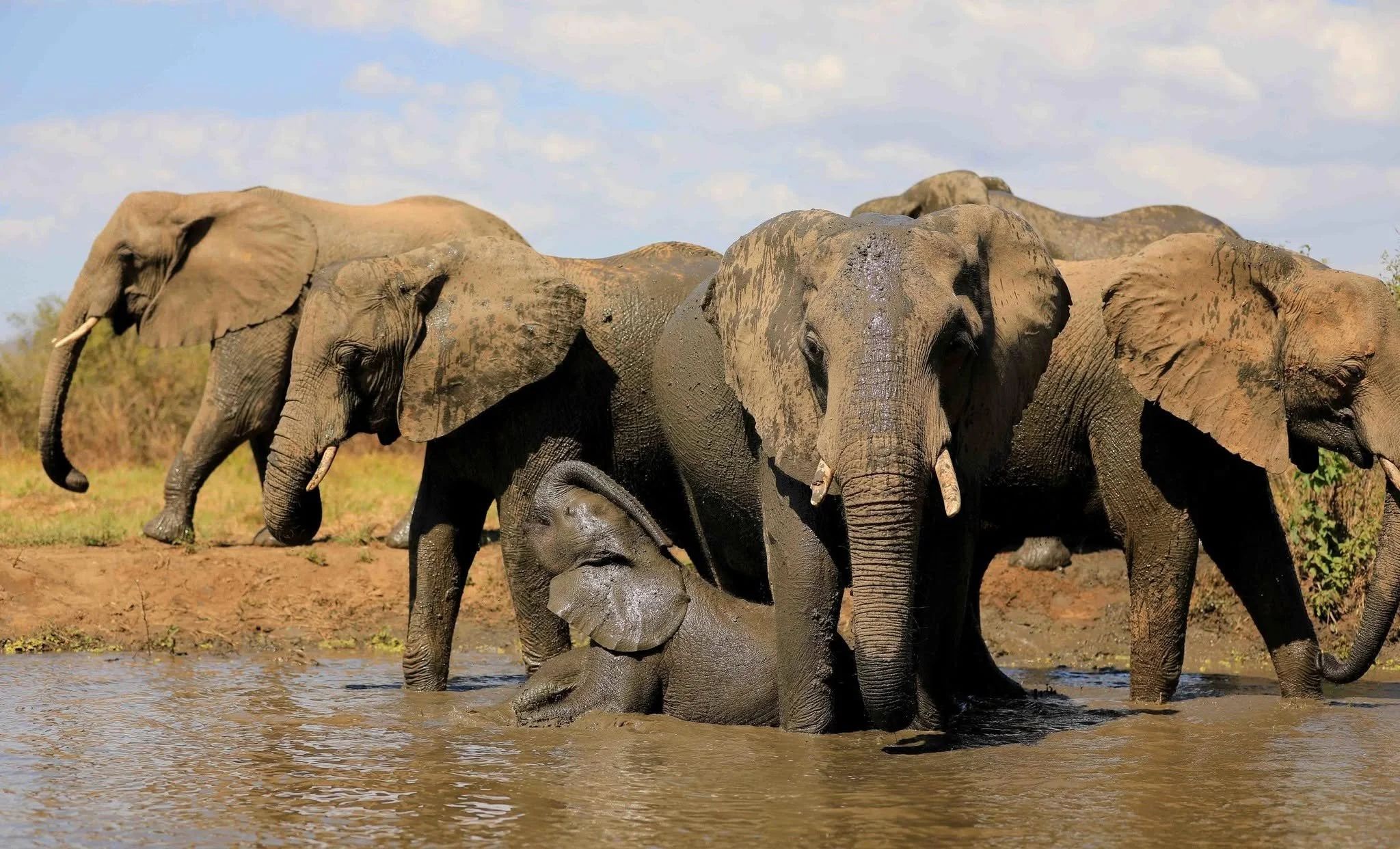
Every elephant, lion, giraffe, and zebra you see is living completely wild and free. They aren't following a schedule, they aren't living in an enclosed area, and they certainly aren't putting on a show for our benefit. Their days revolve around finding food, raising young, avoiding danger, defending territory, and simply surviving.
That unpredictability is exactly what makes safari so magical.
Some mornings you'll round a corner and find a pride of lions stretched out beside the road, completely unfazed by your presence. Other days, you'll spend an hour watching a family of elephants quietly feeding beneath ancient trees. And sometimes, the most memorable moments come when you least expect them—a leopard emerging from the grass, a cheetah scanning the horizon, or even a tiny dung beetle rolling a ball many times its own size.
The animals decide where they'll be, what they'll do, and when they'll move on. We are simply privileged to witness a small part of their lives.
That's why patience is one of the greatest gifts you can bring on safari.
When we slow down, observe, and allow nature to unfold at its own pace, we're often rewarded with experiences no zoo could ever offer. You're not watching an exhibit—you're witnessing life exactly as it has been for thousands of years.
And when something extraordinary does happen, you'll know you didn't watch a performance.
You witnessed a truly unique moment that belonged entirely to the wild.
Wildlife Spotlight
Black Rhino vs. White Rhino... Why the Names Have Nothing to Do with Color
One of the questions I hear most often on safari is:
"Why is that called a white rhino? It's gray!"
The answer surprises almost everyone.
Both black and white rhinos are actually shades of gray. Their names have nothing to do with the color of their skin.
The name "white rhino" is believed to have come from the Dutch word wijd, meaning wide, referring to the animal's broad, square-shaped mouth. Early English settlers are thought to have misunderstood or mispronounced the word as "white," and the name simply stuck. To distinguish the two species, the other became known as the black rhino, even though it is no darker in color.
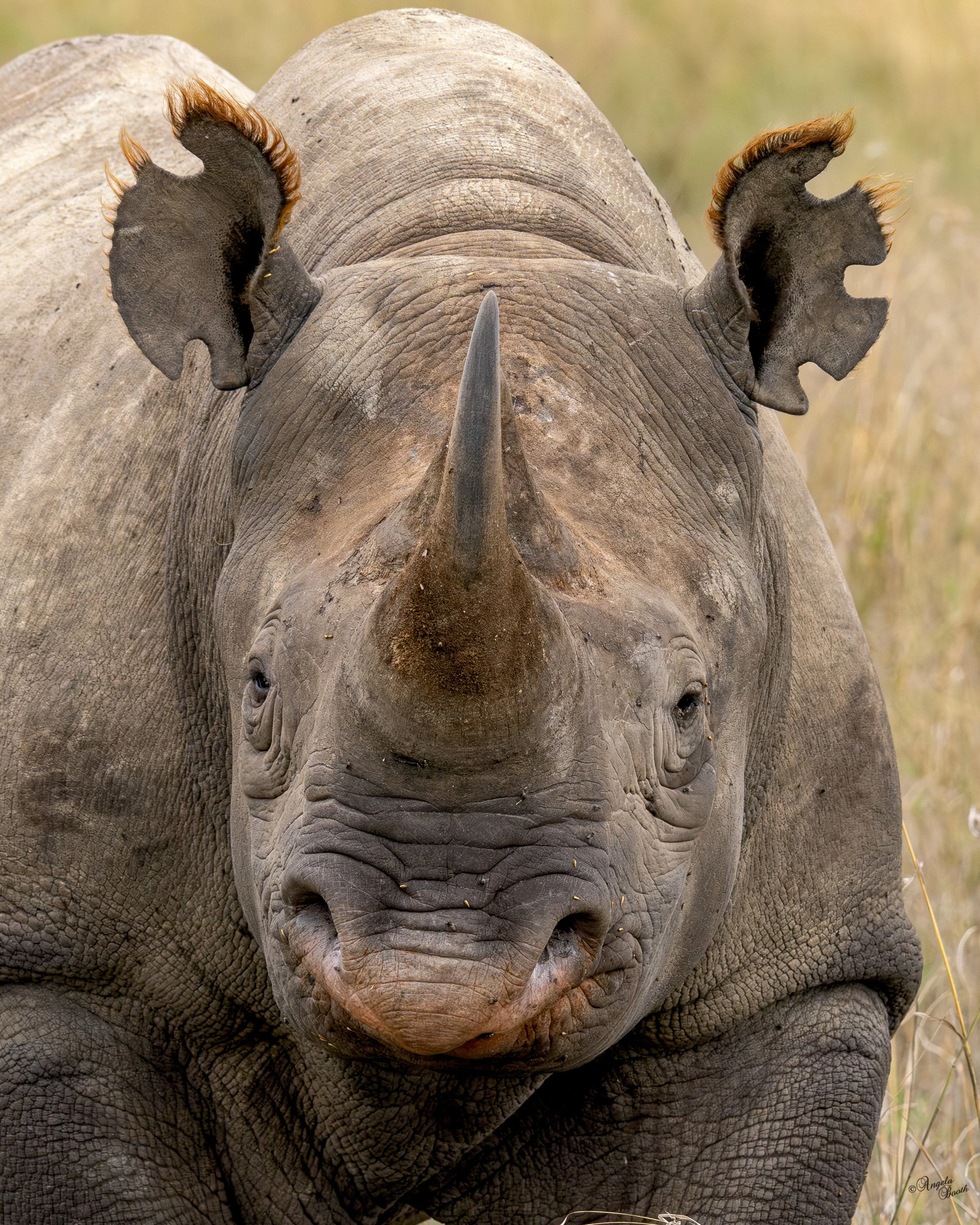
The easiest way to tell them apart isn't by looking at their color—it's by looking at their mouths.
A white rhino has a wide, square lip designed for grazing on grasses. They spend much of their day with their heads down, feeding across the open plains.
A black rhino has a pointed, prehensile upper lip that works almost like a finger, allowing it to grasp leaves and twigs from shrubs and small trees. Because they are browsers rather than grazers, they are often found in thicker vegetation, especially around the wooded slopes of the Ngorongoro Crater.
Their personalities can be different, too. White rhinos are generally more relaxed and tolerant of vehicles, while black rhinos tend to be more solitary and cautious. If they feel surprised, threatened, or pressured, they can become agitated and may react aggressively. That's one of the reasons safari guides treat them with such respect.
For many years, seeing a black rhino in Ngorongoro Crater was one of the highlights of a safari—but it often required patience, sharp eyes, and a bit of luck because they tended to stay well away from the roads.
Now, thanks to the recent introduction of southern white rhinos, guests have another opportunity to appreciate these incredible animals. Seeing both species in the same day has become a very real possibility and is a wonderful reminder that conservation efforts can make a difference.
So the next time someone asks which rhino is which, don't look at the color.
Look at the mouth.
Looking Ahead
As I write this, our EduCruises group is about to begin what I know will be an unforgettable safari in Tanzania.
Over a year of planning, countless emails, text messages, phone calls, and excited conversations have all led to this moment. Soon our guests will be hearing lions roar in the distance, watching elephants wander beneath ancient baobabs, and experiencing the magic that only Africa can offer, while also participating in outstanding Credit Union training sessions led by Tony and Kathy Robinson.
I couldn't be more excited for all of them.
It won't be long before I'm packing my own bags once again. In just a couple of months, we'll be returning to Tanzania for another incredible October safari, and I can hardly wait to be back in the bush.
Between now and then, I've been busy planning several one-of-a-kind adventures for some wonderful travelers, while Kim and I are also dreaming up a few adventures of our own.
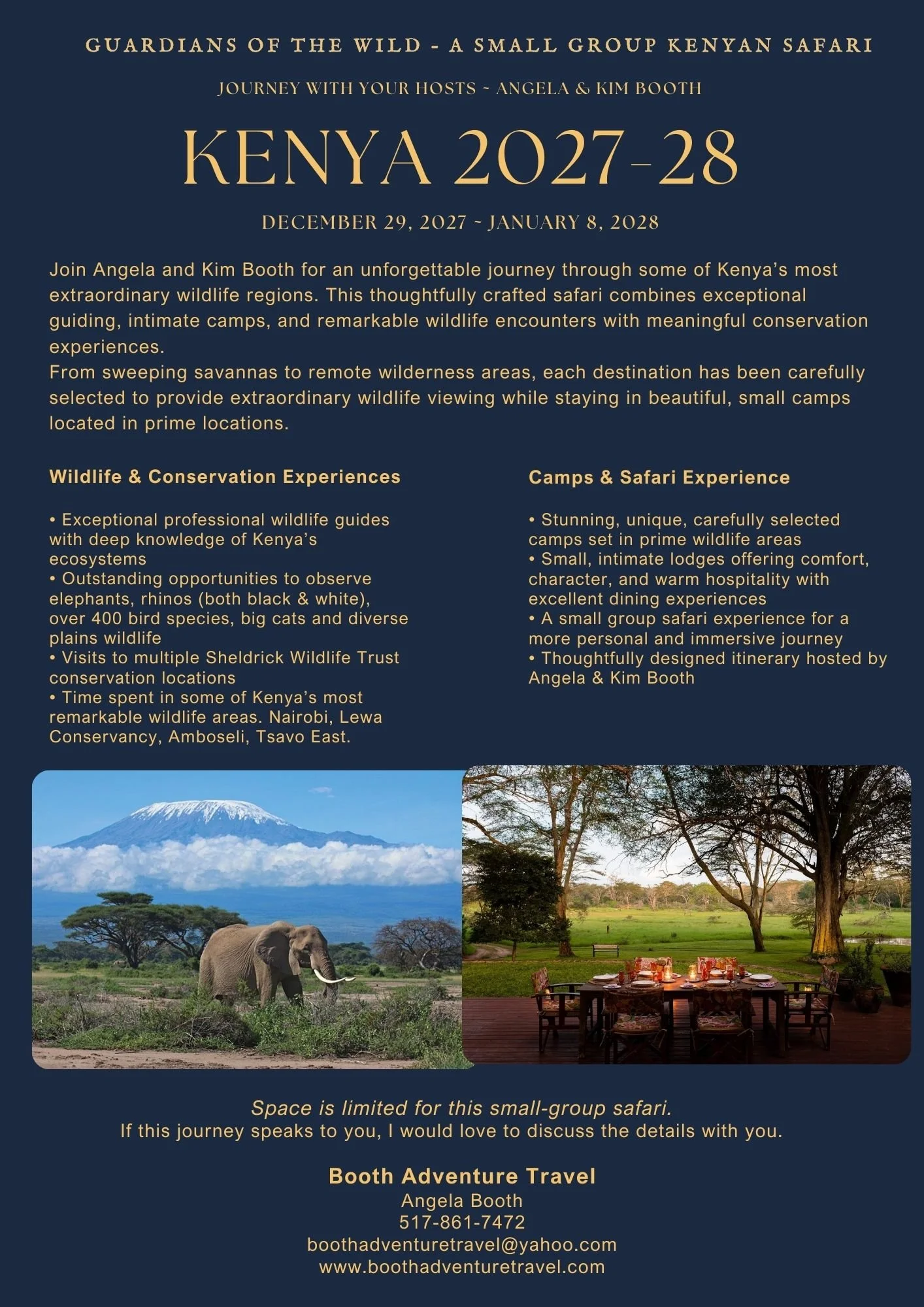
Looking a little further ahead, I still have a few spaces available on our 2027–2028 Guardians of the Wild Kenya Safari. This journey is especially close to my heart because it goes beyond exceptional wildlife viewing. We'll spend time learning firsthand about some of Kenya's most inspiring conservation success stories, including rhino conservation in Lewa Conservancy and elephant conservation in Nairobi and Tsavo East.
If joining Kim and me on this extraordinary journey has been on your dream list, don't wait too long. Spaces are limited, and while I can always arrange a similar private safari, this escorted conservation-focused itinerary may not be offered again for quite some time.
No matter where your dreams of Africa may lead, I hope you'll continue following along here in The Safari Journal.
The next adventure is always just around the corner.
My August Wish for You
As the summer heat settles upon us, I hope you find time to slow down and notice the world around you.
Watch a sunset. Listen to the birds. Take a walk without looking at your phone. Sit quietly by a pond, a lake, or a river, and simply observe.
Nature has a remarkable way of reminding us to breathe, to be present, and to appreciate the little moments we so often rush past.
Whether Africa is in your travel plans this year, sometime in the future, or simply a dream waiting its turn, I hope you continue to nurture that sense of curiosity and wonder.
Until next month... or perhaps the next story I simply can't wait to share...
May you always find a little Wilderness & Wonder wherever life takes you.
Fondly,
Angela