What to Wear on Safari: Comfort Over Couture
When it comes to safari packing, there’s a lot of advice out there. And honestly? Most of it is copied from one provider to another without much thought.
The truth is: you don’t need a new safari wardrobe. A safari isn’t a glamour trip—it’s about comfort, practicality, and being ready for whatever the African bush throws at you.
If you’re comfortable wearing something on a hot summer day at home, you’re likely going to be comfortable wearing it on safari. Keep it simple, lightweight, and practical.

1. Fabrics Matter More Than Fashion
Lightweight fabrics are your friend. They’re cooler in the heat, dry quickly after washing, and keep your luggage weight down.
Denim is heavy and slow to dry, so leave your blue jeans at home is a good idea.
Think cotton, linen blends, or moisture-wicking synthetics.
2. Color Considerations
Daytime: Light colors are fine. They reflect heat and keep you cooler. Don’t worry about “black or blue attracting tsetse flies”—that’s a myth. Tsetse flies aren’t color-driven; movement is what attracts them.
Walks and boating: More muted, earthy tones work best.
Evenings: Avoid bright whites at dinner. White reflects light at night and can attract moths and other night fliers. A light, long sleeved, “overshirt” or lightweight fleece jacket are often welcome layers.
Tip: Whatever you bring will likely get dusty or muddy. Don’t pack anything you’ll worry about sending to the laundry.
3. Layering is Key
Africa can surprise you. Mornings and evenings, even in hot regions, can get chilly:
Light long-sleeve overshirt: Great for sun protection during the day and a light layer in the cool mornings or evenings.
Lightweight fleece or sweatshirt: Adds warmth without weight or bulk.
Raincoat: I bring a simple, no-frills, inexpensive raincoat—one size larger so I can cover my camera or a small bag if we get caught in a rain shower, but I can also use it as a dust cover… ready for whatever Mother Nature sends our way.
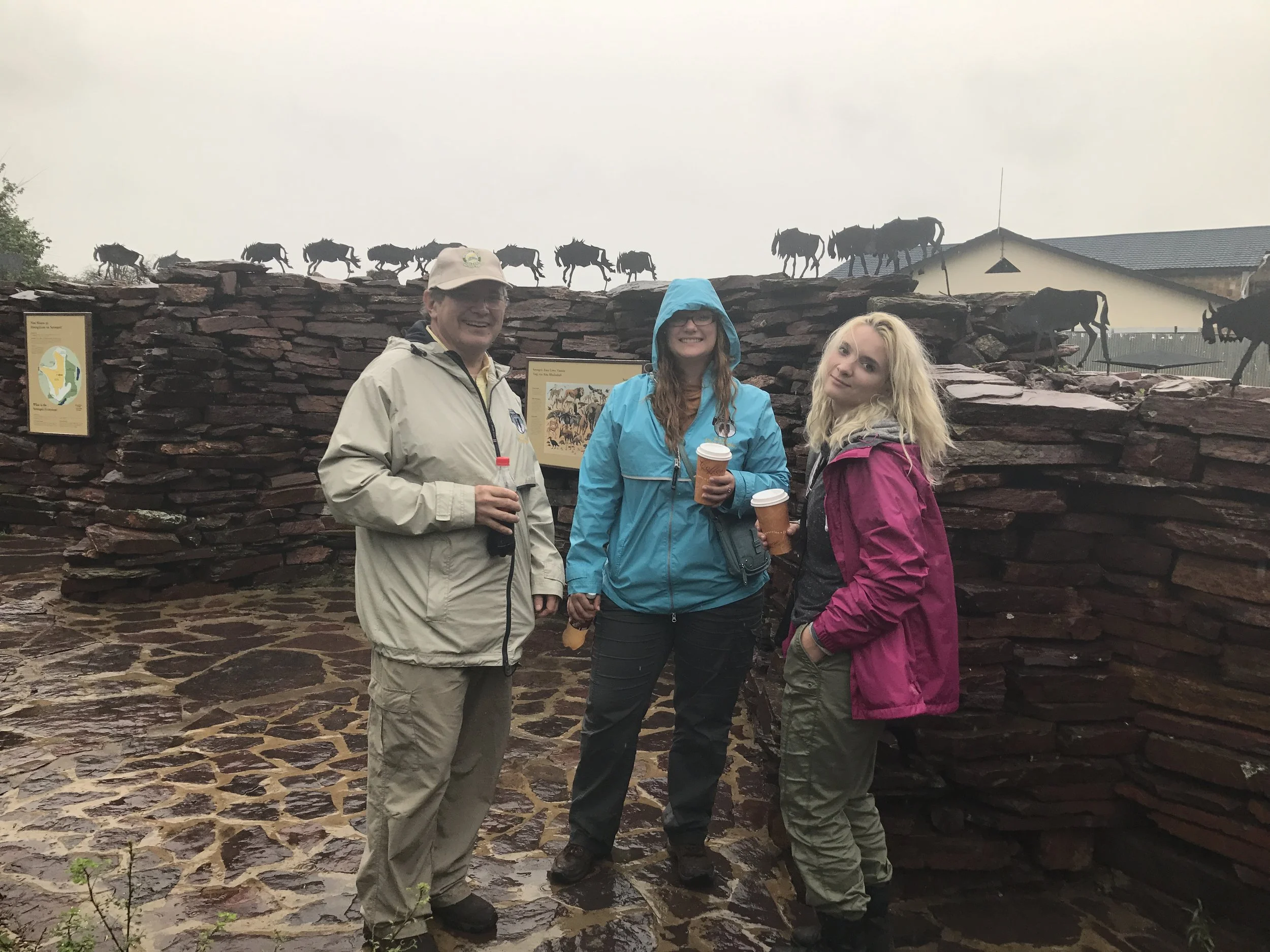
Layering allows you to adapt to changing temperatures throughout the day without overpacking.
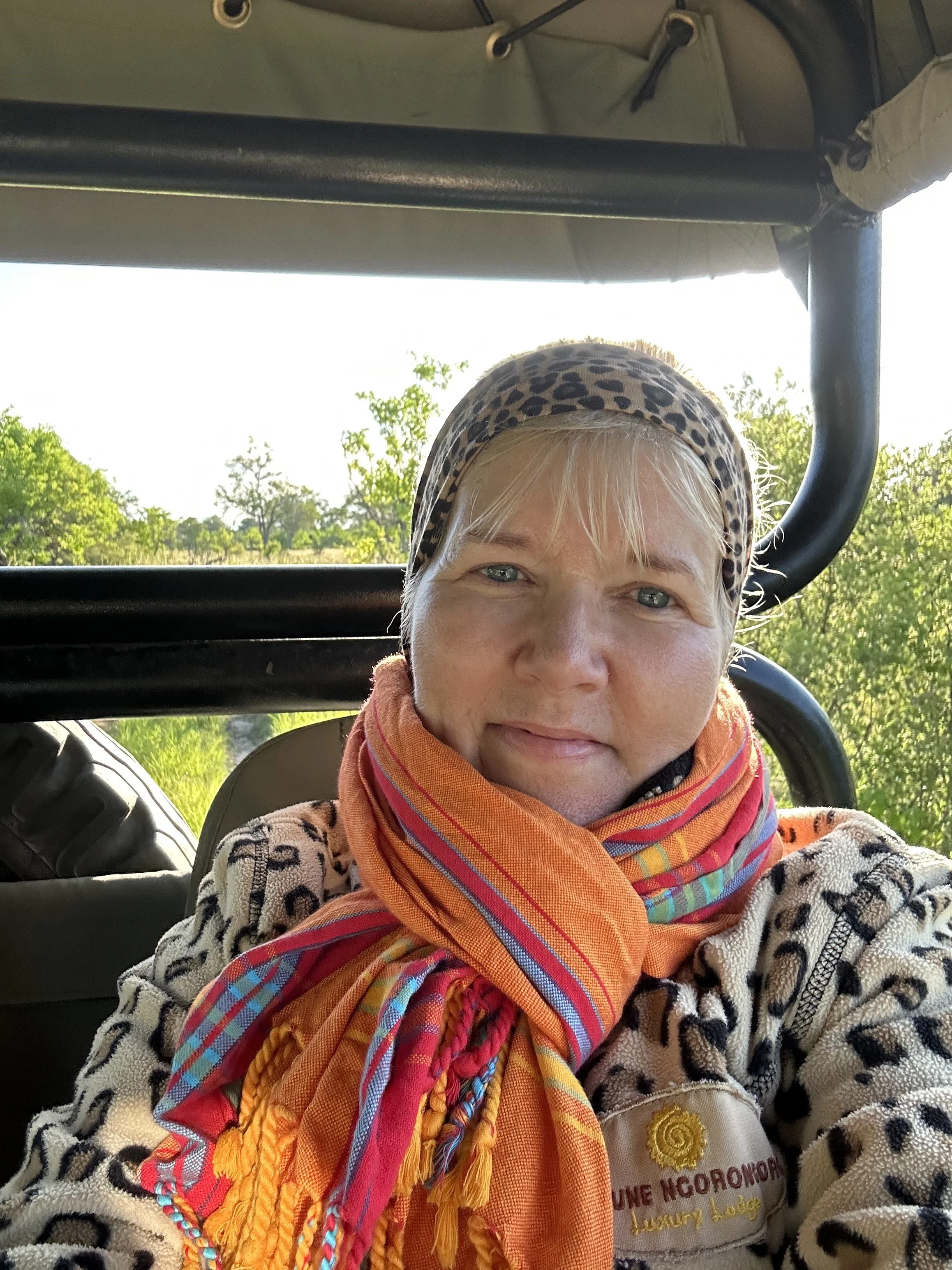
I like to have a small, lightweight tote bag on the truck to stuff my extra layer in when not in use.
4. Packing Smart & Using Laundry Services
Pack light. Safari camps usually offer laundry services, and they’re reasonably priced and well done. A smaller wardrobe is lighter but also keep in mind bringing pieces that mix and match well.
Bring a few versatile items, and plan to rotate them rather than packing a new outfit for each day.
5. Footwear & Accessories
Comfortable closed-toe shoes with non slip soles for your primary footwear.
Sandals or lightweight shoes for midday, relaxing around camp.
Hat with a brim to protect face, ears and neck, sunglasses, and sunscreen spf30 or higher.
Optional: lightweight scarf or bandana for dust protection.
The Takeaway
Safari style is all about function, comfort, and practicality. Don’t feel that you need to buy an entire new wardrobe. Stick to what you know works in warm weather, focus on lightweight fabrics, and embrace layers for changing temperatures. Pack smart, use laundry services, and keep your camera handy at all times!