The Elephant’s Most Impressive Tool
Few things in the natural world are as remarkable as the trunk of an African Elephant.
If you spend even a short amount of time watching elephants on safari, you begin to realize that the trunk is astonishing. It is one of the most versatile tools in the animal kingdom.
A trunk can be powerful enough to uproot a small tree or deliver a forceful blow when an elephant feels threatened.
Yet it is also capable of the gentlest touch.
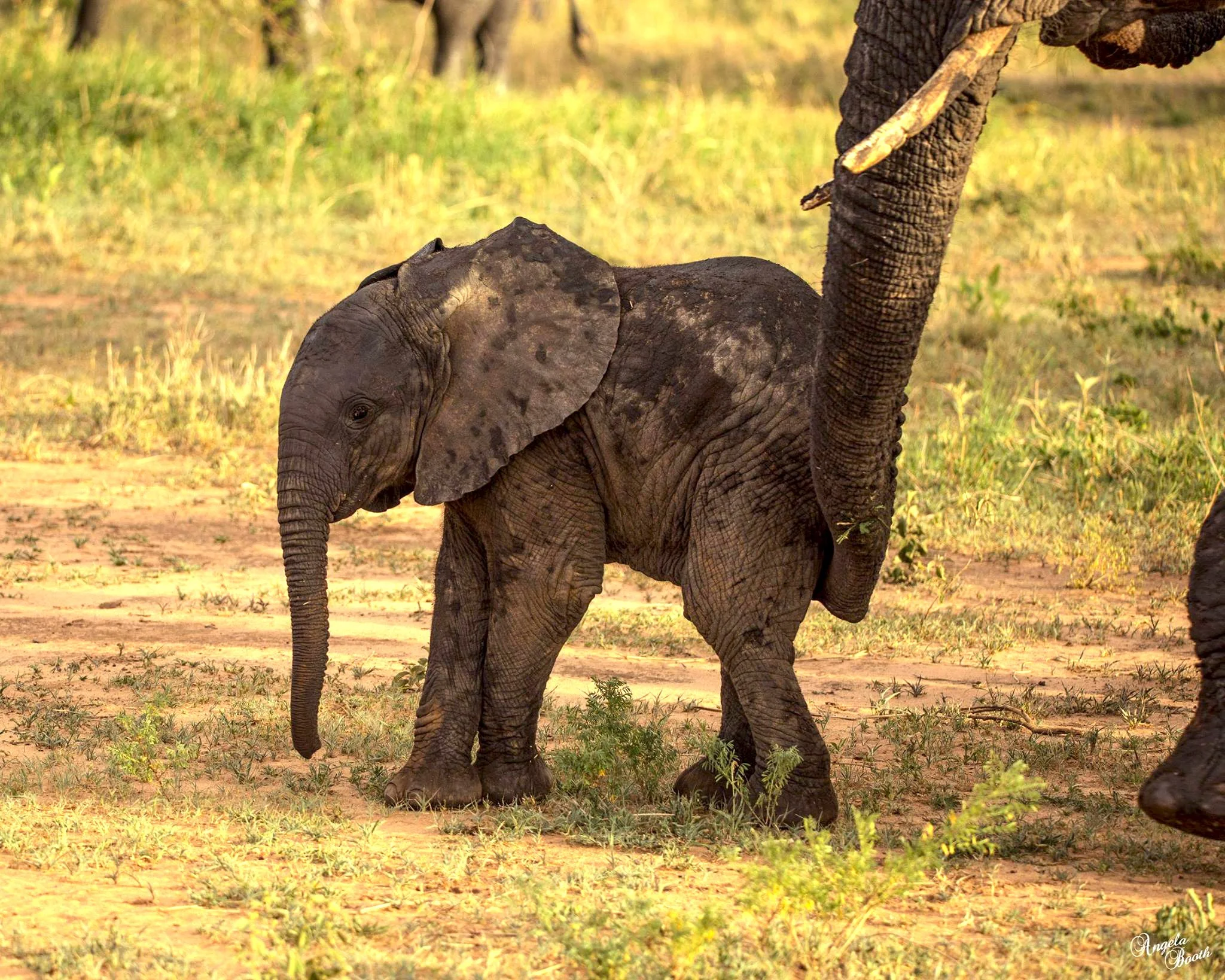
I’ve watched a mother softly guide her baby with the tip of her trunk — a reassuring nudge, a gentle encouragement, a quiet moment of connection between them.
That same trunk can pluck a tiny seed from under a tree with surprising precision.
It gathers mouthfuls of grass and stuffs it purposefully into a waiting mouth.
It curls down into a watering hole, drawing up gallons of water that can be poured into the mouth for a drink or sprayed across dusty skin for a cooling shower.
Strength.
Dexterity.
Sensitivity.
All contained within one extraordinary appendage.
And here’s a fascinating fact that makes the elephant trunk even more astonishing:
An elephant’s trunk contains approximately 40,000 individual muscles.
To put that into perspective, the entire human body has just a little over 600 muscles.
Forty thousand… It’s one of those statistics that makes you pause for a moment.
The more time you spend observing elephants, the more you realize that every movement of that trunk — every curl, every lift, every tug, every gentle touch — is the result of an incredibly complex and finely tuned system.
But what may surprise people even more is that elephants are not born knowing how to use their trunks.
In fact, newborn elephants can be delightfully comical as they try to figure out how the thing works.
A young calf often seems almost surprised by its own trunk — swinging it wildly, stepping on it, or accidentally bumping itself as it experiments with this long, unfamiliar appendage. Sometimes they attempt to drink with it before they’ve learned how, or they try to grasp something only to have the trunk flop clumsily and they have to start all over again.
It takes practice.
Lots of practice.
Watching a young elephant slowly gain control over its trunk is one of the pure joys of spending time with a herd. What begins as awkward experimentation gradually becomes coordination, skill, and eventually the remarkable precision that adult elephants display so effortlessly.
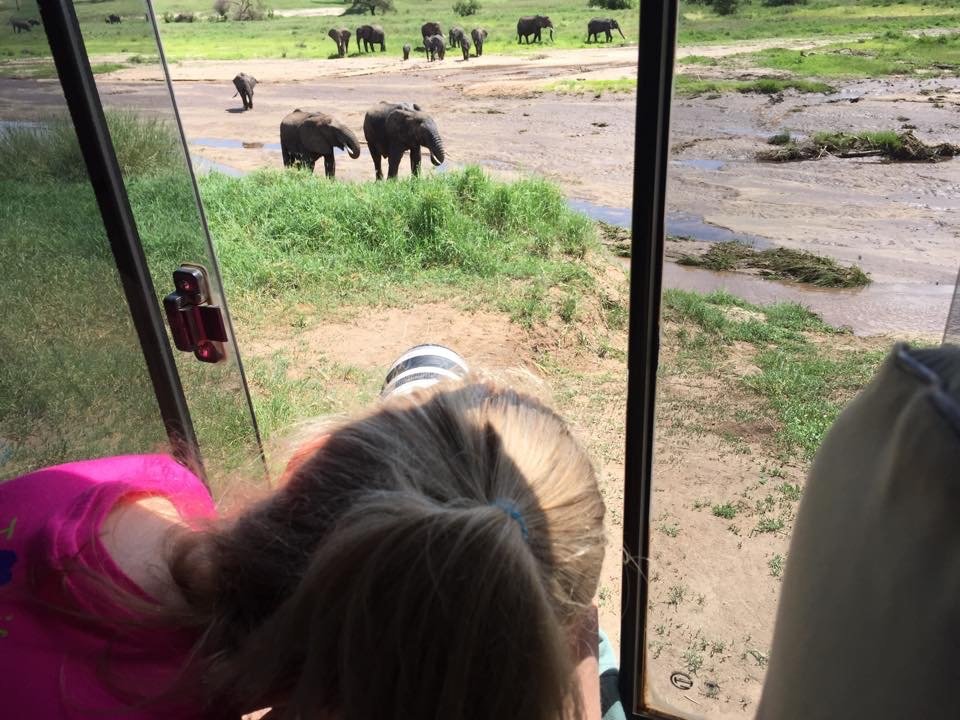
If you find yourself watching elephants feeding or at a watering hole, take the time to focus on the trunk.
Watch how it moves.
Watch what it does.
You may find yourself just as fascinated as I am by these magnificent animals.
Few wildlife experiences stay with me quite like quiet moments spent in the presence of elephants. Watching the way they move through their world — how they feed, communicate, care for their young, and use those remarkable trunks in ways both powerful and delicate — is endlessly fascinating.
It’s one of the great privileges of spending time in Africa’s wild places. Experiences like these remind me why I return again and again… and why sharing them with others is such a joy.